


Musalia Mudavadi Presidential Bid is Headache to DP William Ruto.

Mudavadi factor in 2022 presidential contest a bitter pill to Ruto’s bid.
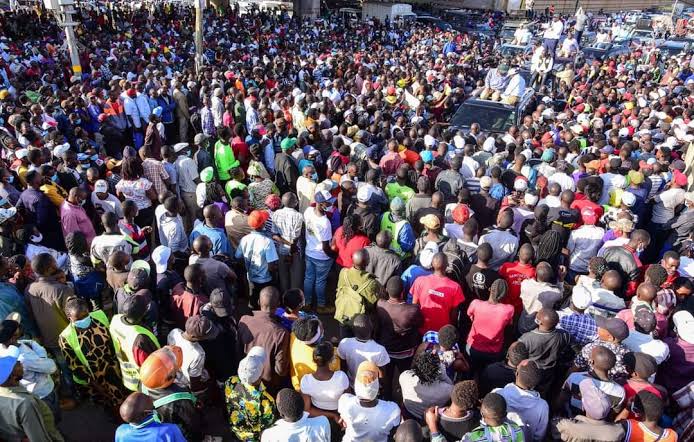
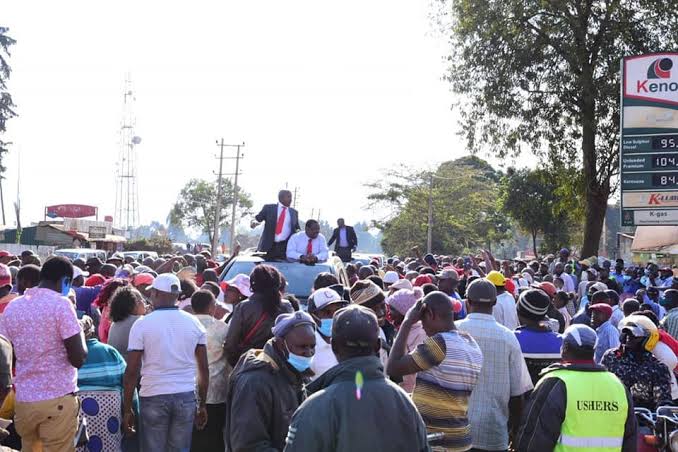
Mudavadi presidential candidature is turning out to be a nightmare for Ruto while a bonus to Raila in journey to presidency.
The candidature of Amani leader Musalia Mudavadi in 2022 presidential election evokes sad and sweet memories of his catalyst role in the 2013 presidential elections.
IIn 2013, Mudavadi’s candidature was the catalyst to Uhuru’s win and he was largely accused of playing a spoiler to Raila.
For Mudavadi, this will be his second stab and preparation in readiness to rule the country in future.
So Mudavadi candidature is likely to be a double sword for the two leading presidential candidate Prime Minister Raila Odinga and deputy president William Ruto.
From the battle of the mountain, we move to the battle for Western.
Ruto has been eying western as soft glove to his presidential bid and has spent millions in the region.
The region has been under the lock of Raila, Mudavadi and by extension president Uhuru Kenyatta.
Raila and Uhuru are in one political divide and this will boost Raila votes in the region even though he has been leading in the presidential votes in the region in the previous general elections.
Mudavadi hopes to rekindle the illusive Luhya unity inorder galvanise the community votes to his favour.
Ruto also hopes his campaign and allies in the region will give him votes.
But just like the mountain is crumbling on him so fast, the Luhya votes may become a mirage.
Raila will get the majority of the Luhya votes and Mudavadi and Ruto will be left to battle over the left overs.
This scenario disadvantages Ruto in his pursuit to amass the votes country wide.
In the Mountains, as Raila and Ruto battle it out, Mudavadi will be picking into his basket the droplets. The undecided voters who could have either voted for Raila or Ruto would find a safe hand in Mudavadi.
This scene will replay in other regions.
This again hurts Ruto in his journey to presidency because Raila only needs 30 percent of the mountain votes to ride easily to state house.
Raila is starting the journey with known vote block while Ruto cam be said to be starting from unknown votes.
Again, with a section of OKA members led by Gedion Moi saying they are working on a coalition with President Uhuru and Raila, this leaves Mudavadi and Ruto exposed.
For Ruto and Mudavadi it will force them to make hard decision to form a coalition or run separately and lose to Raila altogether.
Edited By Rodgers Ouma
Manchester United Search for New Manager

Manchester United are working to persuade Zinédine Zidane to succeed Ole Gunnar Solskjær as their manager. The Glazer family’s discontent with Solskjær’s performances as a manager has been growing.
Zidane is understood to be unsure whether the opportunity presented is the right one to take at this point but #mufc’s hierarchy are hopeful that his close relationships with Cristiano Ronaldo and Raphaël Varane can help to convince him to join.
[Duncan Castles, Times Sport]

Edited By Rodgers Ouma
Manchester united Transfer News
🗞 Dean Henderson wants to leave #mufc at the end of the season if he cannot reclaim his No.1 spot from David de Gea, but accepts he is unlikely to leave in January.
🗞 Dean Henderson would prefer to stay at #mufc but fears his career is in danger of stagnating. He would consider leaving in January — Newcastle are understood to be one of the options — but United are unlikely to allow him to depart mid-season.
🗞 Donny van de Beek and Phil Jones are likely to seek moves away from #mufc in January.
🗞 #mufc want to resolve the futures of Paul Pogba and Jesse Lingard, but it appears both will leave as free agents next summer.
[ChrisWheeler, Daily Mail]
Siaya County Gubernatorial candidate Charles Owino Hits back to Rasanga.


Siaya County Gubernatorial seat candidate Charles Owino Wahongo has urged incumbent Governor Cornel Rasanga to stop making utterances that cause anxiety and tension within ODM over his possible successor.
He asked the governor to impede from namedropping ODM leader Raila Odinga’s name in the Siaya gubernatorial race.
Charles Owino said by linking Raila to the contest, Meaning He is trying to portrays the ODM Chief as a dictator.
Charles Owino stated that “ Raila has fought for democracy all his adult life. His family suffered immensely because of this and Rasanga should stop making it look like the opposition leader is a dictator,” he said.
Owino termed as reckless and unfortunate remarks by the governor that the shoe laces ( the governor position) were handed to him by Raila in 2013 and he will be returning the shoes laces to senator James Orengo.
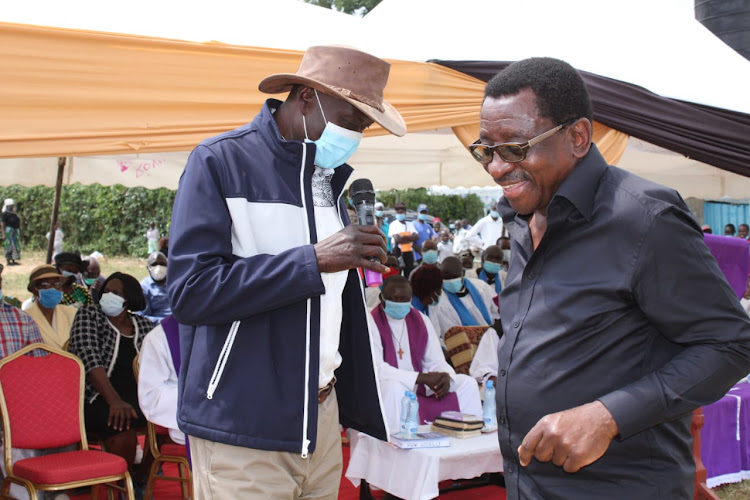
“ I have been telling you that these shoe laces I have were given to me by Raila. Now as I step out, I’ll hand them over to Orengo,” he said on a function at his home in Segere,Alego Usonga Sub County Siaya County.
In a past function, Rasanga said Raila gave him the shoe laces but kept spare ones.
“ The shoe lace that you ( Rasanga ) claim was given to you by Raila was meant for your current term. The 10 years you have been in office. The ones for 2022, up to 2032 , are with the people of Siaya county ,” Owino said.
After hosting over 200 defectors from Wiper Party to ODM at his home, Rasanga publicly announced he was supporting Orengo as his preferred candidate to inherit the seat. Senator Orengo who had been listed as amongst the leaders who would receive the defectors however gave the function a wide berth.

Edited By Rodgers Ouma
Unilever Profile History.

Unilever has a history that goes back to the 1880s where William Hesketh Lever founded the Lever Brothers Limited a family grocery business. Later on, he started a soap-making factory in Merseyside called Port Sunlight. The company grew and by 1890 Lever had soap factories around Europe, the USA, and Canada. just to mention few.
While Lever Brothers were creating their empire, two family-owned businesses Jurgens (margarine selling family business) and Van der Bergh (butter merchants) were also creating strategies to get ahead of their competitors.
The two companies came together in 1908 to join forces and fight the weak margarine market. In 1927 Jurgens and Van der Bergh as well as Schicht, Centra and Jbusinesses formed Margarine Unie. This union was mainly composed of European businesses that were involved in the production of goods made mainly from oils and fats.
In 1929 Margarine Unie amalgamated with Lever Brothers Limited and on 1 January 1930 Univelever was officially formed. The company went on to release popular products such as Blue Band margarine, Dove, and Lifebuoy washing soap. While in the 1900s Unilever had over 50 product categories, it structured and focused on four main business areas: Personal care, home care, foods, and specialty chemicals.
Edited By Rodgers Ouma
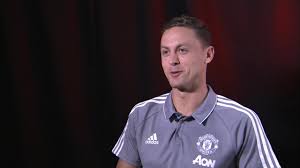
Nemanja Matic Interview

Nemanja Matic:
“The goal I will never forget? There are quite a few. Palace in the last minute, the semi final of the FA Cup against Tottenham and in Benfica versus Porto, the biggest Portuguese derby, those three goals.”
“The toughest player I played against was probably Yaya Toure, when he played at Manchester City. In his prime, he was a very good player – probably one of the best players in the Premier League and one of the best midfielders in the world at that time.”
“So I really enjoyed playing against him. He always gave me a hard time and you always had to be at your best against him.”
“My nickname is The Wolf. They call me The Wolf but I don’t know why. You have to ask to them. I don’t know, they said I always find a way to win in the training sessions. They say, basically, that I am cheating. I don’t know. Wolves never cheat!”
“I spoke to him [Vidic] and he always gave me good advice about the club. He is a big legend as you know. I spoke to him months ago and he is always positive. He always supports us and is a gentleman. I am happy I am good friends with him.”
“My favourite player when I was a kid was Zinedine Zidane. When I was a kid, I used to play in a similar position to him so he was my idol. I think, in my opinion, he is one of the best players in football history.”
on #mufc’s best dribber: “The best dribbler with the ball is definitely not me. I don’t have to do that because my position doesn’t allow me to dribble a lot. I would say probably our strikers – Greenwood and Rashford. Yeah maybe these two players.”
“That’s the way I play [calm under pressure]. I think that’s my quality. I can stay calm to help the team sometimes when I see we are in a little bit of panic or sometimes the team needs stability. I think that’s part of my style of playing.”
“Best dressed in the team? Myself. By far. I think sometimes he [Pogba] posts his style on social media and I think people saw why. I don’t want to get involved with it again. If he wants, he can post, okay, but I don’t like his style!”
“The funniest character in the dressing room is Paul [Pogba]. Paul always gets angry and it is funny to watch him. Erm, someone else… no, I will say Paul.”
“Every time I step on to the pitch, I always remember where I started from. When I see Old Trafford it gives me a bit more motivation to play because I think the people come from, let’s say, poor villages like me, that gives us more power to show our best.”
on becoming a coach: “I started my coaching badges but I don’t think yet about this. I focus on my job now. I think I have still got four or five more seasons to play. After that, we will see but, at the moment, I am only focusing on playing football.”
“I played behind the striker [as a child] so I was a no.10. I was small, smaller than now. Much smaller! I had great technique and I used to score many goals and get lots of assists.”
The funniest character in the dressing room is Paul [Pogba]. Paul always gets angry and it is funny to watch him. Erm, someone else… no, I will say Paul.”
“Every time I step on to the pitch, I always remember where I started from. When I see Old Trafford it gives me a bit more motivation to play because I think the people come from, let’s say, poor villages like me, that gives us more power to show our best.”
on becoming a coach: “I started my coaching badges but I don’t think yet about this. I focus on my job now. I think I have still got four or five more seasons to play. After that, we will see but, at the moment, I am only focusing on playing football.”
“I played behind the striker [as a child] so I was a no.10. I was small, smaller than now. Much smaller! I had great technique and I used to score many goals and get lots of assists.”
By Rodgers Ouma
Youth Political Participation

Young people are often excluded or overlooked as political candidates. Politics is typically regarded as a space for politically experienced men, and while women are often disadvantaged in accumulating experience to run for office, young people are systematically marginalized because of their young age, limited opportunities, and projected lack of experience.
As the increased political participation of women benefits society as a whole, the presence of young people in decision-making positions benefits all citizens and not just youth. The Inter-parliamentary Union (IPU) reports that people between the ages of 20 and 44 make up 57% of the world’s voting age population but only 26% of the world’s Members of Parliament (MPs).
Young people under 30 represent 1.9% of the world’s MPs and more than 80% of the world’s upper houses of Parliament have no MPs aged under 30.
While young people often play central and catalyzing roles in movements for democracy around the world, they are less engaged than older generations in voting and party activism.
Together, these trends have inspired many international organizations to study the lack of youth political participation and train youth activists to become political leaders.
Accordingly, the meaningful participation of women in national, local, and community leadership roles has become an important focus on global development policy. Still, some may ask why it Matters if women become political leaders, elected policymakers, or civil society activists.
Why does the world need more women involved in all aspects of the political process? Women’s political participation results in tangible gains for democracy, including greater responsiveness to citizen needs, increased cooperation across party and ethnic lines, and a more sustainable future.
For political systems to be representative, all parts of society must be included. When young people are disenfranchised or disengaged from political processes, a significant portion of the population has little or no voice or influence in decisions that affect group members’ lives. A key consequence is the undermining of political systems’ representativeness.
To make a difference in the longer term, it is essential that young people are engaged in formal political processes and have a say in formulating today’s and tomorrow’s politics.
Inclusive political participation is not only a fundamental political and democratic right but also is crucial to building stable and peaceful societies and developing policies that respond to the specific needs of younger generations.
For young people to be adequately represented in political institutions, processes, and decision-making, and in particular in elections, they must know their rights and be given the necessary knowledge and capacity to participate in a meaningful way at all levels.
When there are obstacles to participating in formal, institutionalized political processes, young people can rapidly feel disempowered.
Many tend to believe that their voices are not going to be heard or that they will not be taken seriously even if they are heard. The problem becomes circular as politicians may lose interest in responding to the aspirations of young people if they cannot win their votes.
This in turn leads to young people being increasingly excluded from taking part in decision-making, or in debates about key socio-economic and political issues, despite their sensitivity to the demands for social equity and justice, environmental protection and cultural diversity.
In new and emerging democracies, the inclusion of young people in formal political processes is important from the start. Young people’s active contributions can bring democratic values to life, leading to the overturning of authoritarian practices.
In countries where young people have led protests that have forced authoritarian regimes from power, they are likely to feel significant frustration if they are not included in new formal decision-making procedures. This can destabilize democratization and accelerate conflict dynamics.
IEBC and other electoral stakeholders have a role to play in promoting young people’s participation in formal decision-making processes.
For this role to be effective, it is necessary to understand the interconnected nature of the obstacles to participation in these processes that young people encounter.

By Rodgers Ouma
Political Analyst
Contact Me 0720349829
Political Journey For Youths In Kenya.

Despite making up more than half of the population in Kenya, young people (ages 18-35) often find themselves marginalized from mainstream politics and decision making.
They struggle to gain the respect of public officials and are seen as lacking the skills and experience to engage in political activity and lead positive change in their communities.
This exclusion, combined with limited educational and economic opportunities, can leave young people both idle and frustrated with the status quo.
Today’s youth need real opportunities to participate in political processes and contribute to practical solutions that advance development.
When given an opportunity to organize, voice their opinions and play a meaningful role in political decision making, young people consistently demonstrate their willingness and ability to foster positive, lasting change.
They also become more likely to demand and defend democracy, and gain a greater sense of belonging.
Daktari Daniel Odhiambo supports young people Like OBWAR ERNEST From Magombe to channel his energy, creativity and aspirations and become political leader and activist.
Through Daniel Odhiambo the Ugenya MP aspirant Obwar Ernest is able to build his political skills, knowledge and confidence while helping him to clinch the seat of Ugenya Constituency.
Through campaigning for Daniel Odhiambo aspirant for Ugenya MP,Obwar have found himself more effectively to expres voice, build relationships with political leaders like Oburu Odinga,James Orengo and break down sociocultural and institutional barriers to participation.
This have made Obwar Ernest a public figure and A speaker in his Village Magombe in West Ugenya, Ugenya Sub County, SIAYA County.


Manchester United Legendary Defender.
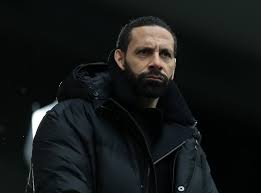
Ferdinand on his Five with Vibe podcast says he doesn’t believe Solskjaer can deliver the Premier League or Champions League to Old Trafford, but could leave the club with his ‘head held high’.
‘He’s done actually what he’s been brought in to do. He’s come in and give the fans hope again, made the fans want to come back and watch your team again.
‘He’s done that – he’s done a great job in that sense but is he going to take us to win titles? Is he going to make us challenge to win a Champions League? Sitting here I have to be honest with myself and say I think no.
He added: ‘The football club will be living here and breathing longer than any individual. It’s what’s best for this football club.
‘I just feel that maybe it might be the time now for the baton to be handed over to take us on now. I think Ole would leave now with his head held high.’
Edited By Rodgers Ouma
 WORLD NEWS BROADCASTING COMPANY WBC