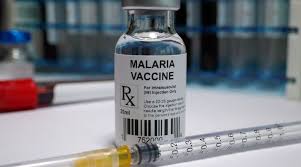
Historic go-ahead for malaria vaccine to protect African children

Children across much of Africa are to be vaccinated against malaria in a historic moment in the fight against the deadly disease.

Malaria has been one of the biggest scourges on humanity for millennia and mostly kills babies and infants.

Having a vaccine – after more than a century of trying – is among medicine’s greatest achievements.

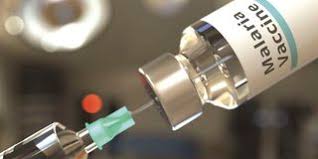
The vaccine – called RTS,S – was proven effective six years ago.

Now, after the success of pilot immunisation programmes in Ghana, Kenya and Malawi, the World Health Organization says the vaccine should be rolled out across sub-Saharan Africa and in other regions with moderate to high malaria transmission.Dr Tedros Adhanom Ghebreyesus, director-general of the WHO, said it was “a historic moment”.

“The long-awaited malaria vaccine for children is a breakthrough for science, child health and malaria control,” he said. “[It] could save tens of thousands of young lives each year.”

Deadly parasite

Malaria is a parasite that invades and destroys our blood cells in order to reproduce, and it’s spread by the bite of blood-sucking mosquitoes.

Drugs to kill the parasite, bed-nets to prevent bites and insecticides to kill the mosquito have all helped reduce malaria.

But the greatest burden of the disease is felt in Africa, where more than 260,000 children died from the disease in 2019. It takes years of being repeatedly infected to build up immunity and even this only reduces the chances of becoming severely ill.

Dr Kwame Amponsa-Achiano piloted the vaccine in Ghana to assess whether mass vaccination was feasible and effective.

“It is quite an exciting moment for us, with large scale vaccination I believe the malaria toll will be reduced to the barest minimum,” he said.

Constantly catching malaria as a child inspired Dr Amponsa-Achiano to become a doctor in Ghana.

“It was distressing, almost every week you were out of school, malaria has taken a toll on us for a long time,” he told me.

Saving children’s lives

There are more than 100 types of malaria parasite. The RTS,S vaccine targets the one that is most deadly and most common in Africa: Plasmodium falciparum.

Trials, reported in 2015, showed the vaccine could prevent around four in 10 cases of malaria, three in 10 severe cases and lead to the number of children needing blood transfusions falling by a third.

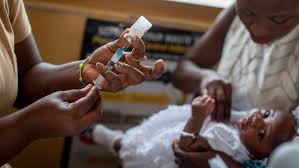
However, there were doubts the vaccine would work in the real world as it requires four doses to be effective. The first three are given a month apart at five, six and seven months old, and a final booster is needed at around 18 months. The findings of the pilots were discussed by two expert advisory groups at the WHO on Wednesday.

The results, from more than 2.3 million doses, showed:

the vaccine was safe and still led to a 30% reduction in severe malaria
it reached more than two-thirds of children who don’t have a bed-net to sleep under
there was no negative impact on other routine vaccines or other measures to prevent malaria
the vaccine was cost-effective
“From a scientific perspective, this is a massive breakthrough, from a public health perspective this is a historical feat,” said Dr Pedro Alonso, the director of the WHO Global Malaria Programme.

“We’ve been looking for a malaria vaccine for over 100 years now, it will save lives and prevent disease in African children.”

Why is malaria so hard to beat?

Having just seen the world develop Covid vaccines in record time, you might be wondering why it has taken so long with malaria?

Malaria is caused by a parasite which is far more insidious and sophisticated than the virus that causes Covid. Comparing them is like comparing a person and a cabbage.

The malaria parasite has evolved to evade our immune system. That’s why you have to catch malaria time and time again before starting to get even limited protection.

It has a complicated life cycle across two species (humans and mosquitoes), and even inside our body it morphs between different forms as it infects liver cells and red blood cells.

Developing a malaria vaccine is like nailing jelly to a wall and RTS,S is only able to target the sporozoite form of the parasite (this is the stage between being bitten by a mosquito and the parasite getting to the liver).

It is why the vaccine is ‘only’ 40% effective. However, this is still a remarkable success and paves the way for the development of yet more potent vaccines.

The vaccine, developed by the pharmaceutical giant GSK, is not going to replace all the other measures for controlling malaria such as insecticide-treated bed nets. It will be used alongside them to get closer to the goal of zero deaths from malaria.

And it won’t be used outside of Africa where different forms of malaria, which the vaccine can’t protect against, are more prevalent.

Dr Ashley Birkett, from the Path malaria vaccine initiative, said rolling out the vaccine was a “historic event” that would “take away fear” from families.

He told me: “Imagine your young child could be healthy one day and full of potential and then after the bite of an infected mosquito, while playing with friends or sleeping in a bed, they could be dead in a couple of weeks.

“Malaria is a huge problem, it’s frightening and scary.”
By Rodgers Ochieng Ouma

oumarodgers035@gmail.com

Historic go-ahead for malaria vaccine to protect African children

Children across much of Africa are to be vaccinated against malaria in a historic moment in the fight against the deadly disease.

Malaria has been one of the biggest scourges on humanity for millennia and mostly kills babies and infants.

Having a vaccine – after more than a century of trying – is among medicine’s greatest achievements.

The vaccine – called RTS,S – was proven effective six years ago.

Now, after the success of pilot immunisation programmes in Ghana, Kenya and Malawi, the World Health Organization says the vaccine should be rolled out across sub-Saharan Africa and in other regions with moderate to high malaria transmission.Dr Tedros Adhanom Ghebreyesus, director-general of the WHO, said it was “a historic moment”.

“The long-awaited malaria vaccine for children is a breakthrough for science, child health and malaria control,” he said. “[It] could save tens of thousands of young lives each year.”

Deadly parasite

Malaria is a parasite that invades and destroys our blood cells in order to reproduce, and it’s spread by the bite of blood-sucking mosquitoes.

Drugs to kill the parasite, bed-nets to prevent bites and insecticides to kill the mosquito have all helped reduce malaria.

But the greatest burden of the disease is felt in Africa, where more than 260,000 children died from the disease in 2019. It takes years of being repeatedly infected to build up immunity and even this only reduces the chances of becoming severely ill.

Dr Kwame Amponsa-Achiano piloted the vaccine in Ghana to assess whether mass vaccination was feasible and effective.

“It is quite an exciting moment for us, with large scale vaccination I believe the malaria toll will be reduced to the barest minimum,” he said.

Constantly catching malaria as a child inspired Dr Amponsa-Achiano to become a doctor in Ghana.

“It was distressing, almost every week you were out of school, malaria has taken a toll on us for a long time,” he told me.

Saving children’s lives

There are more than 100 types of malaria parasite. The RTS,S vaccine targets the one that is most deadly and most common in Africa: Plasmodium falciparum.

Trials, reported in 2015, showed the vaccine could prevent around four in 10 cases of malaria, three in 10 severe cases and lead to the number of children needing blood transfusions falling by a third.

However, there were doubts the vaccine would work in the real world as it requires four doses to be effective. The first three are given a month apart at five, six and seven months old, and a final booster is needed at around 18 months. The findings of the pilots were discussed by two expert advisory groups at the WHO on Wednesday.

The results, from more than 2.3 million doses, showed:

the vaccine was safe and still led to a 30% reduction in severe malaria
it reached more than two-thirds of children who don’t have a bed-net to sleep under
there was no negative impact on other routine vaccines or other measures to prevent malaria
the vaccine was cost-effective
“From a scientific perspective, this is a massive breakthrough, from a public health perspective this is a historical feat,” said Dr Pedro Alonso, the director of the WHO Global Malaria Programme.

“We’ve been looking for a malaria vaccine for over 100 years now, it will save lives and prevent disease in African children.”

Why is malaria so hard to beat?

Having just seen the world develop Covid vaccines in record time, you might be wondering why it has taken so long with malaria?

Malaria is caused by a parasite which is far more insidious and sophisticated than the virus that causes Covid. Comparing them is like comparing a person and a cabbage.

The malaria parasite has evolved to evade our immune system. That’s why you have to catch malaria time and time again before starting to get even limited protection.

It has a complicated life cycle across two species (humans and mosquitoes), and even inside our body it morphs between different forms as it infects liver cells and red blood cells.

Developing a malaria vaccine is like nailing jelly to a wall and RTS,S is only able to target the sporozoite form of the parasite (this is the stage between being bitten by a mosquito and the parasite getting to the liver).

It is why the vaccine is ‘only’ 40% effective. However, this is still a remarkable success and paves the way for the development of yet more potent vaccines.

The vaccine, developed by the pharmaceutical giant GSK, is not going to replace all the other measures for controlling malaria such as insecticide-treated bed nets. It will be used alongside them to get closer to the goal of zero deaths from malaria.

And it won’t be used outside of Africa where different forms of malaria, which the vaccine can’t protect against, are more prevalent.

Dr Ashley Birkett, from the Path malaria vaccine initiative, said rolling out the vaccine was a “historic event” that would “take away fear” from families.

He told me: “Imagine your young child could be healthy one day and full of potential and then after the bite of an infected mosquito, while playing with friends or sleeping in a bed, they could be dead in a couple of weeks.

“Malaria is a huge problem, it’s frightening and scary.”
By Rodgers Ochieng Ouma

oumarodgers035@gmail.com

Historic go-ahead for malaria vaccine to protect African children

Children across much of Africa are to be vaccinated against malaria in a historic moment in the fight against the deadly disease.

Malaria has been one of the biggest scourges on humanity for millennia and mostly kills babies and infants.

Having a vaccine – after more than a century of trying – is among medicine’s greatest achievements.

The vaccine – called RTS,S – was proven effective six years ago.

Now, after the success of pilot immunisation programmes in Ghana, Kenya and Malawi, the World Health Organization says the vaccine should be rolled out across sub-Saharan Africa and in other regions with moderate to high malaria transmission.Dr Tedros Adhanom Ghebreyesus, director-general of the WHO, said it was “a historic moment”.

“The long-awaited malaria vaccine for children is a breakthrough for science, child health and malaria control,” he said. “[It] could save tens of thousands of young lives each year.”

Deadly parasite

Malaria is a parasite that invades and destroys our blood cells in order to reproduce, and it’s spread by the bite of blood-sucking mosquitoes.

Drugs to kill the parasite, bed-nets to prevent bites and insecticides to kill the mosquito have all helped reduce malaria.

But the greatest burden of the disease is felt in Africa, where more than 260,000 children died from the disease in 2019. It takes years of being repeatedly infected to build up immunity and even this only reduces the chances of becoming severely ill.

Dr Kwame Amponsa-Achiano piloted the vaccine in Ghana to assess whether mass vaccination was feasible and effective.

“It is quite an exciting moment for us, with large scale vaccination I believe the malaria toll will be reduced to the barest minimum,” he said.

Constantly catching malaria as a child inspired Dr Amponsa-Achiano to become a doctor in Ghana.

“It was distressing, almost every week you were out of school, malaria has taken a toll on us for a long time,” he told me.

Saving children’s lives

There are more than 100 types of malaria parasite. The RTS,S vaccine targets the one that is most deadly and most common in Africa: Plasmodium falciparum.

Trials, reported in 2015, showed the vaccine could prevent around four in 10 cases of malaria, three in 10 severe cases and lead to the number of children needing blood transfusions falling by a third.

However, there were doubts the vaccine would work in the real world as it requires four doses to be effective. The first three are given a month apart at five, six and seven months old, and a final booster is needed at around 18 months. The findings of the pilots were discussed by two expert advisory groups at the WHO on Wednesday.

The results, from more than 2.3 million doses, showed:

the vaccine was safe and still led to a 30% reduction in severe malaria
it reached more than two-thirds of children who don’t have a bed-net to sleep under
there was no negative impact on other routine vaccines or other measures to prevent malaria
the vaccine was cost-effective
“From a scientific perspective, this is a massive breakthrough, from a public health perspective this is a historical feat,” said Dr Pedro Alonso, the director of the WHO Global Malaria Programme.

“We’ve been looking for a malaria vaccine for over 100 years now, it will save lives and prevent disease in African children.”

Why is malaria so hard to beat?

Having just seen the world develop Covid vaccines in record time, you might be wondering why it has taken so long with malaria?

Malaria is caused by a parasite which is far more insidious and sophisticated than the virus that causes Covid. Comparing them is like comparing a person and a cabbage.

The malaria parasite has evolved to evade our immune system. That’s why you have to catch malaria time and time again before starting to get even limited protection.

It has a complicated life cycle across two species (humans and mosquitoes), and even inside our body it morphs between different forms as it infects liver cells and red blood cells.

Developing a malaria vaccine is like nailing jelly to a wall and RTS,S is only able to target the sporozoite form of the parasite (this is the stage between being bitten by a mosquito and the parasite getting to the liver).

It is why the vaccine is ‘only’ 40% effective. However, this is still a remarkable success and paves the way for the development of yet more potent vaccines.

The vaccine, developed by the pharmaceutical giant GSK, is not going to replace all the other measures for controlling malaria such as insecticide-treated bed nets. It will be used alongside them to get closer to the goal of zero deaths from malaria.

And it won’t be used outside of Africa where different forms of malaria, which the vaccine can’t protect against, are more prevalent.

Dr Ashley Birkett, from the Path malaria vaccine initiative, said rolling out the vaccine was a “historic event” that would “take away fear” from families.

He told me: “Imagine your young child could be healthy one day and full of potential and then after the bite of an infected mosquito, while playing with friends or sleeping in a bed, they could be dead in a couple of weeks.

“Malaria is a huge problem, it’s frightening and scary.”
By Rodgers Ochieng Ouma

oumarodgers035@gmail.com
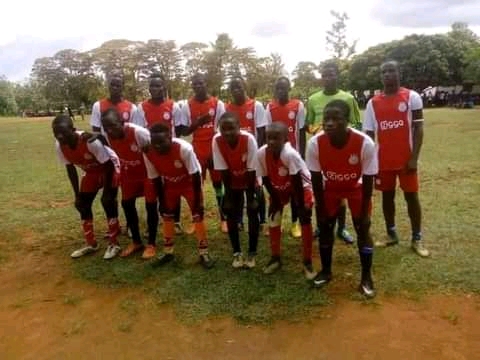
Hon. Daniel Odhiambo Tournament Quatre Finals. NORTH UGENYA DERBY

The Biggest Rivalry LELA FOOTBALL CLUB 2-1 SEGA SHARKS.

There’s no feeling quite like a victory in a derby match against your most hated adversaries. These are the games that decide who laughs last and loudest in the office, classroom, shop-floor and forum. These are the games you love to win and hate to lose. They can make or break your season – longer, if you’re in different divisions.

A quick note on inclusion rules. We’ve stuck to club teams and we haven’t chosen any team twice: no matter how many foes you despise (or how widely hated you are), you’re only allowed one mortal enemy.

The vast majority of these derby rivals are geographically close – the same city or the one just up the road – but there are some exceptions. Oh, and for each fixture we’ve listed the teams in alphabetical order: no, we don’t think they’re a bigger team than you. The Fans of Lela FC have rallied together to congratulate their Coach Oliver Benson together Kevin Ngala for the good job they have done to Make the area Great. The captain of the team Francis Ochieng couldn’t hide joy by Congratulating the team he leads in his Social Media account. Congratulations Lela Football Club for proceeding to Ugenya Tournament headed by Daktari Odhiambo Daniel the Ugenya Mp aspirant 2022.

A ten-car motorcade and quick photo session: Day DP Ruto was acting president

In 2014, President Uhuru Kenyatta signed an order handing over power to Deputy President William Ruto to act as the president of the Republic of Kenya. This was before things got bitter between the two.

It was clearly in the peak of their presidency and Ruto would be the acting president for three days as Uhuru attended a status conference at The Hague where he was to answer charges of crimes against humanity linked to the 2007/08 post-election violence.

A limousine ride in a ten-car motorcade, a quick photo session, a mushy Facebook post and a peep in the official diary of President Uhuru Kenyatta. That is how Ruto is said to have begun his day at Harambee House as he warmed the seat for his boss.

The following morning, Ruto left his official home in Nairobi’s Karen, sirens blaring, zoomed past his former office at Harambee House Annex and headed directly to President Kenyatta’s office in Harambee House which would become his station for the next 72 hours.A small crowd of early-rising Kenyans going to work who watched as the motorcade of high-end cars snaked into the presidential address. The doors opened so quickly, Ruto did not even get time to put on his jacket. He simply carried it in his left hand, as he shook hands with some of his staff using his right hand.

All this time, he was surrounded by a phalanx of the mean-looking, suit-wearing elite Recce Unit officers who handle presidential security.

He climbed the short staircase to the door, walked past the reception, took the VIP elevator to the second floor and then walked briskly on the carpeted corridor to President Kenyatta’s office.He found President Kenyatta’s diary on the table. He opened it, and checked the pending assignments. He made a mental note to tackle those.

He sank into Kenyatta’s seat, posed for pictures, and then checked his official Facebook page.

“UK (Uhuru Kenyatta), I stand with you as my brother, my leader, my boss and my President. As we navigate strange and unprecedented paths, I reiterate our conviction that in time, all will be well and we will be vindicated,” the Deputy President, now wearing the ‘Acting President’s’ hat, posted on the social network.

Perhaps it is the three days as acting president that solidified the DP’s resolve in pursuing the top seat in the 2022 general elections.

Ruto’s three days as president was a clear indication of deep trust between the two leaders at the time. It also signified that the president had attended the court matter in an individual capacity and not as the president of Kenya.

The Trial Chamber V (b) had directed for the physical presence of President Uhuru during the status conference.

“Let it not be said that I’m attending the status conference as the President of Kenya. Nothing warrants my being in court. I will go to The Hague on Wednesday, not as President of Kenya. I invoke Article 147 by appointing Deputy President William Ruto acting President of Kenya,” said the president on October 6, 2014.

Uhuru said he arrived at the decision to travel to The Hague as an individual to preserve the sovereignty of Kenya and its democracy.

“I have chosen not to put the sovereignty of this nation on trial. I received notice to attend to a status conference at the ICC. This is not a time for us to be tense; it is time for us to be proud of the democracy we have built,” he said.

However exciting, the experience of being acting president was, Ruto’s plate was full with both his diary and that of the president requiring his execution.

The DP became the second Deputy President to become an acting president after former President Daniel Arap Moi took an acting role for 90 days after the death of President Jomo Kenyatta in 1978.

By Rodgers Ochieng Ouma

HIGH COST OF LIVING Blame game as Munyes says Yatani responsible for high fuel prices

He says Treasury is holding on to Sh24 billion in fuel subsidies


Blame game as Munyes says Yatani responsible for high fuel prices
REGISTER
SIGN IN
NEWS
World
Africa
The Conversation
Corridors Of Power
On The Dock
Breakfast Briefing
Big Read
Fact Checker
Star Farmer
The Morning Brief
OPINION
Leader
Star Blogs
Columnists
Cartoon
SPORTS
AFCON 2019
Football
Athletics
Rugby
Tennis
Golf
Boxing
Basketball
BUSINESS
Kenya
Africa
Markets
Commentary
Living Spaces
COUNTIES
Nairobi
North Eastern
Coast
Central
Nyanza
Rift Valley
Western
Eastern
SIASA
SASA
Word Is
Lifestyle
Technology
Entertainment
Society
Fashion
Food
Travel
Books
CLASSIFIEDS
HEALTH
WOMENWORK
CORONAVIRUS
PARTNER SITES
Classic 105
East FM
KISS 100
Radio Jambo
Mpasho
ADVERTISE WITH US
Call: 0711 046 000
Email: advertise@the-star.co.ke
CONNECT WITH US

HIGH COST OF LIVING
Blame game as Munyes says Yatani responsible for high fuel prices
He says Treasury is holding on to Sh24 billion in fuel subsidies
In Summary
Kenyans did not pay more at the pumps between April and August because of government subsidies.
Energy regulator removed subsidies of Sh7.10 on petrol, Sh9.90 on diesel and Sh11.36 on kerosene that applied on the prices of fuel sold in the month to September 14.
by ALLAN KISIA
Political Writer
News
05 October 2021 – 06:20

Petroleum Cabinet Secretary John Munyes before the Senate Energy Committee to answer questions on the rise of fuel prices on October, 4, 2021
Image: /EZEKIEL AMING’A
Petroleum CS John Munyes has blamed his National Treasury counterpart Ukur Yatani for the high fuel prices that have sparked protests from Kenyans.

Munyes on Monday told the Senate Energy Committee that the Treasury has declined to release Sh24 billion from the Petroleum Development Fund that would be used to cushion Kenyans against high fuel prices.

He said Kenyans did not pay more at the pumps between April and August because of government subsidies. “Out of the Sh32 billion from the Petroleum Development Fund, we spent Sh8.6 billion in the five months to stabilise fuel prices. We did not receive any money in September,” Munyes explained.

Fuel prices rose to the highest level in Kenya’s history after the government discontinued a subsidy scheme introduced in April to ease public outrage over the high cost of living.

The regulator — Energy and Petroleum Regulatory Authority — removed subsidies of Sh7.10 on petrol, Sh9.90 on diesel and Sh11.36 on kerosene that applied to the prices of fuel sold in the month to September 14.

On Monday, Munyes noted that the Kenya Revenue Authority collects money for the Fund on behalf of his ministry and hands it over to the National Treasury for disbursement.

“The National Treasury is best placed to explain why they have not disbursed the money to us. It is for that reason I wanted my National Treasury counterpart to be part of this meeting,” he stated.

Committee chair Ephraim Maina sought to be told whether Kenyans would have paid less at the pump if the National Treasury released the remainder of the money.

“I only got Sh8.6 billion out of the Sh32 billion. We should have been both before this committee to shed more light on the matter,” Munyes replied. Nominated Senator Petronilla Were asked Munyes to provide the committee with the letter he wrote to Yatani asking for the funds.

“We need to be sure that the Ministry of Petroleum wrote to the National Treasury asking for the funds to cushion Kenyans from high fuel prices,” she said.

Nandi Senator Samson Cherargei wondered whether the Cabinet Secretary had raised the matter with President Uhuru Kenyatta.

“The last time you did not attend our meeting because the President had sent you to Sudan for very important matters. Since the President seems to be so close to you, we would want to know if you brought to his attention that you needed money to cushion Kenyans from high fuel prices,” he said.

The state has been offering consumers of diesel and kerosene a subsidy, with those using petrol enjoying the benefit with the exemption of the May review.

This saw the regulator keep diesel and kerosene prices unchanged since April at Sh107.66 and Sh97.85 a litre respectively on fears an upward review would fuel public anger. Petrol had remained unchanged at Sh127.14 since June.

Kenyans are now paying up to Sh19 more for a litre of petrol compared to their East African neighbours of Tanzania, Uganda and Rwanda.

Motorists and transporters are paying more than double what their counterparts in Addis Ababa are paying, where a litre of petrol and diesel are retailing at an equivalent of Sh51.28 and Sh44.66, respectively.

By Rodgers Ochieng Ouma

oumarodgers035@gmail.com

Thank you For Reading.

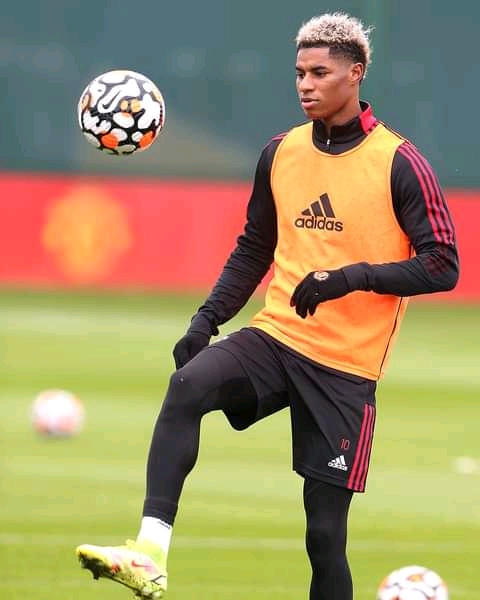
Manchester United planning new formation after Scott McTominay new role

By Rodgers Ochieng Ouma

Manchester United could be about to switch to a new formation after Scott McTominay has reportedly given a new role as a sole defensive midfielder.

According to The Athletic Michael Carrick and McKenna have been tutoring McTominay on the discipline and passing required to operate as a sole sitter at Man United. This means that Manchester United are planning on making Scott McTominay their new defensive midfielder, hence handing Ole Gunnar Solskjaer the room to switch to a 4-3-3 formation.

This is my suggestion. I think the Norwegian tried this formation against Villarreal. He played the Scotland international as a lone defensive midfielder, leaving Paul Pogba and Bruno Fernandes as double 8s. This would only enable United to play more of an attacking football and many, who watched the game against the La Liga side, saw that happened.

“We wanted to go more attacking, we played with two no.8s, wide wingers, a centre-forward and Scotty [McTominay] was left a little bit on his own defensively,” said Solskjaer after the win.

“The two centre-backs did well to stop a few counter-attacks.”

However, that didn’t work really well, for the defensive part at least. United’s backline was easy to force through. David de Gea was forced to make several saves to keep the Reds in the game. That was the result of leaving Scott McTominay as the only defensive midfielder. Maybe because the Scot isn’t a natural defensive midfielder.

Carrick, who played the majority of his career as a defensive midfielder, has been teaching McTominay what it takes to be a DM.

Fred does not blend well with Pogba, the same goes for Donny Van de Beek but McTominay has somewhat proved to be compatible with any pairing in the midfield. Matic doesn’t go well with Fred but could work well with any pairing. Matic isn’t a regular starter but, again giving the Scot another advantage. Also, the reason why United are planning on trying a new formation is due to Marcus Rashford’s return from injury.

The England international is expected to be in the squad against Leicester City after the international break. This means Paul Pogba’s duty on the left-flank would be over, hence forcing Solskjaer to decide on whether he would rely on Fred to pair with Scott McTominay as a double pivot or agree with Pogba that he isn’t a defensive midfielder and go with two no8s, just as he did against Villarreal.

I think it wouldn’t be a difficult decision to make. Fred hasn’t been at his best this season and it would raise eyebrows if the Norwegian drops Pogba for the Brazilian and continue with his normal 4-2-3-1 formation.

Marcus Rashford and other forwards would also play their roles – putting out solid performances that would give Solskjaer a headache on who to start across the front line.

HENDERSON: RASHFORD IS LOOKING SHARPER THAN EVER

You know what? It’s funny because he looks so sharp since he’s come back from his shoulder injury and everything from last season,” explained Henderson to club media. “I think he was carrying a few knocks.

“So for him to come back, he looks back to his best and I’m really excited to see him out there.

“I think he is going to help the team a lot.”

Manchester United forward Marcus Rashford is straining at the leash after returning to training, according to team-mate Dean Henderson.

The pair grew up in the Academy together and were part of the same year group before both making it into the first team.

Rashford admits he was struggling with injury at times last season and, after appearing for England at Euro 2020, it was decided the best course of action was an operation to solve a shoulder problem.

After missing the start of the 2021/22 campaign, there is a hope he may be available for the game at Leicester City immediately after the international break, and his work at Carrington has already caught the eye of his friend.It has been suggested the break, although far from ideal, may be of long-term benefit to Rashford after such a sustained period of football since making his debut as a youngster.

“I think he got obviously thrown in at a young age and didn’t really get a break mentally to switch off,” explained Henderson. “And I think it’s given him time to do this. He will be hungrier than ever to get back out there and play again.

“I do honestly think, sometimes, that a break is great. It’s helped me this summer and I’m sure it’s helped him. I think he’ll come back better than ever.”

By Rodgers Ochieng Ouma

oumarodgers035@gmail.com

Raila Odinga interview in Chamgei FM

BABA’ INTERVIEW THIS MORNING -Highlights

1. I have no problem with Uhuru’s offshore account, if he can account for it then that’s fine and that’s what we want.

2. I have no any property or any offshore account, all my accounts and properties are in Kenya.

3. Mau issue was a cabinet decision, I was just an implementor. Ruto and his team used it and incited the Kalenjin community against me.

4. I am not going to work with Ruto come 2022 because he is already running and he has declared his bid for Presidency.

5. Waiting for the Kalenjin community to give me someone I can work with, but I’m still the Arap Mibei you used to know.

6. Whoever advised Ruto to use the word Hustler misadvised him, Hustler ‘ni mtu mkorofi, mwizi na mtu mwenye anatumia njia za mikato’

7. Corruption is killing the country, one person cannot purport to be a hustler while he has many helicopters, giving money left right and centre… It is wrong.

8. I am yet to declare my presidential bid, for now I want to unite the country through ‘Azimio La Umoja’

9. The SGR amount was overpriced because of corruption, our initial plan with Kibaki was cheaper and cost effective.

10. I am not looking forward to any endorsement, the people of Kenya knows well who to elect.

By Rodgers Ochieng OumaO

oumarodgers035@gmail.com

Unilever ranked Top Employer in Kenya

NAIROBI, October, 2016 –The Top Employer Institute, an international certification institute, has ranked Unilever as the Number one employer in Kenya in 2016/17 for the fourth year in a row.

The Top Employers certification is only awarded to organisations that achieve the highest standards of excellence in employee conditions and is recognised internationally. It certifies organisations where employees feel valued, and where their creative ideas can germinate and contribute towards the company’s overall achievements.

“We are really proud to have once again hit this year’s milestone in setting HR standards in the region. This is a true affirmation of Unilever’s commitment to the people and talent agenda through global best practice that strongly resonates across its markets including right here in Kenya.” Said Justin Apsey, Unilever CEO for East Africa.

The annual international research and audit undertaken by the Top Employers Institute recognises leading employers around the world that provide excellent employee conditions, nurture and develop talent throughout all levels of the organisation, and which strive to continuously optimise employment practices.

Bruno Witvoet, Unilever Africa President, commented; “At Unilever in Africa we work hard to combine our global experience with our deep Africa roots to develop local talent so we are delighted to see our efforts recognized by the internationally renowned Top Employers, which is a truly independent and verifiable measure of industry best practice. The future of Africa lies in its people and we are fully committed to seeing our African operations set best in class HR standards and offer talented Africans a career based on values and integrity where they can truly shine.”

Potential Top Employers undergo a rigorous certification process as they are evaluated across nine key areas: Talent Strategy, Workforce Planning, On-boarding, Learning & Development, Performance Management, Leadership Development, Career & Succession Management, Compensation & Benefits, and Culture.

The Top Employer Institute also ranked the leading consumer goods manufacturer as best employer in Africa for the third year running. Unilever’s Top Employer status in Africa was solidified when company was certified in Zimbabwe for the first time and achieved No.1 status in Ghana, Nigeria and Kenya. The organization also added the No. 1 FMCG in South Africa and No. 1 Manufacturing in South Africa certifications to their haul.

About Top Employers Institute

The Top Employers Institute globally certifies excellence in the conditions that employers create for their people. Optimal employee conditions ensure that people develop themselves personally and professionally. Organisations that attain the Top Employers certification showcase their outstanding employment environment. They show that they nurture and develop talent throughout all levels of the organisation. This is beneficial for all stakeholders, and in particular their current and prospective employees. http://www.top-employers.com

To discover the certified organisations and learn more about what makes them part of the exclusive group of companies certified as Top Employers Global, visit: http://www.top-employers.com/landing-pages/top-employers-global-2016/

About Unilever Kenya

Unilever is one of the leading suppliers of food, home and personal care products in Kenya. With about 19,000 employees, Unilever is one of the largest private employers in the region. Working to create a better future every day, Unilever helps people feel good, look good and get more out of life. Its portfolio includes most loved locally produced brands, OMO, Sunlight, Blue Band, Royco, Geisha and Vaseline, as well as key world’s renowned brands, like Knorr, Dove, Lux, Axe, among many others.

The company was ranked Top Employer for 2015/16 in Kenya by the Top Employer Institute, an international certification institute.

Unilever’s global ambition is to decouple growth from environmental impact (including sourcing, consumer use and disposal) and increase social impact. Unilever is committed to helping more than a billion people take action to improve their health and well-being, sourcing all its agricultural raw materials sustainably by 2020, and decoupling its growth from its environmental impact. Supporting its three big goals, Unilever has defined seven pillars, underpinned by targets encompassing social, environmental and economic areas. See more on the Unilever Sustainable Living Plan at http://www.unilever.com/sustainable-living/. For more information about Unilever and its brands, please visit http://www.unilever.com.

By Rodgers Ochieng Ouma

oumarodgers035@gmail.com